Wartime photographs, family albums, survivor interviews, wreck films and the continuing work of remembrance. Explore the two ships at the heart of this memorial and the wider story of Force 28.
Open a photograph to look closer, with its date, caption and original source.
17 matching photographs
The ships · Wartime · exact date unconfirmed
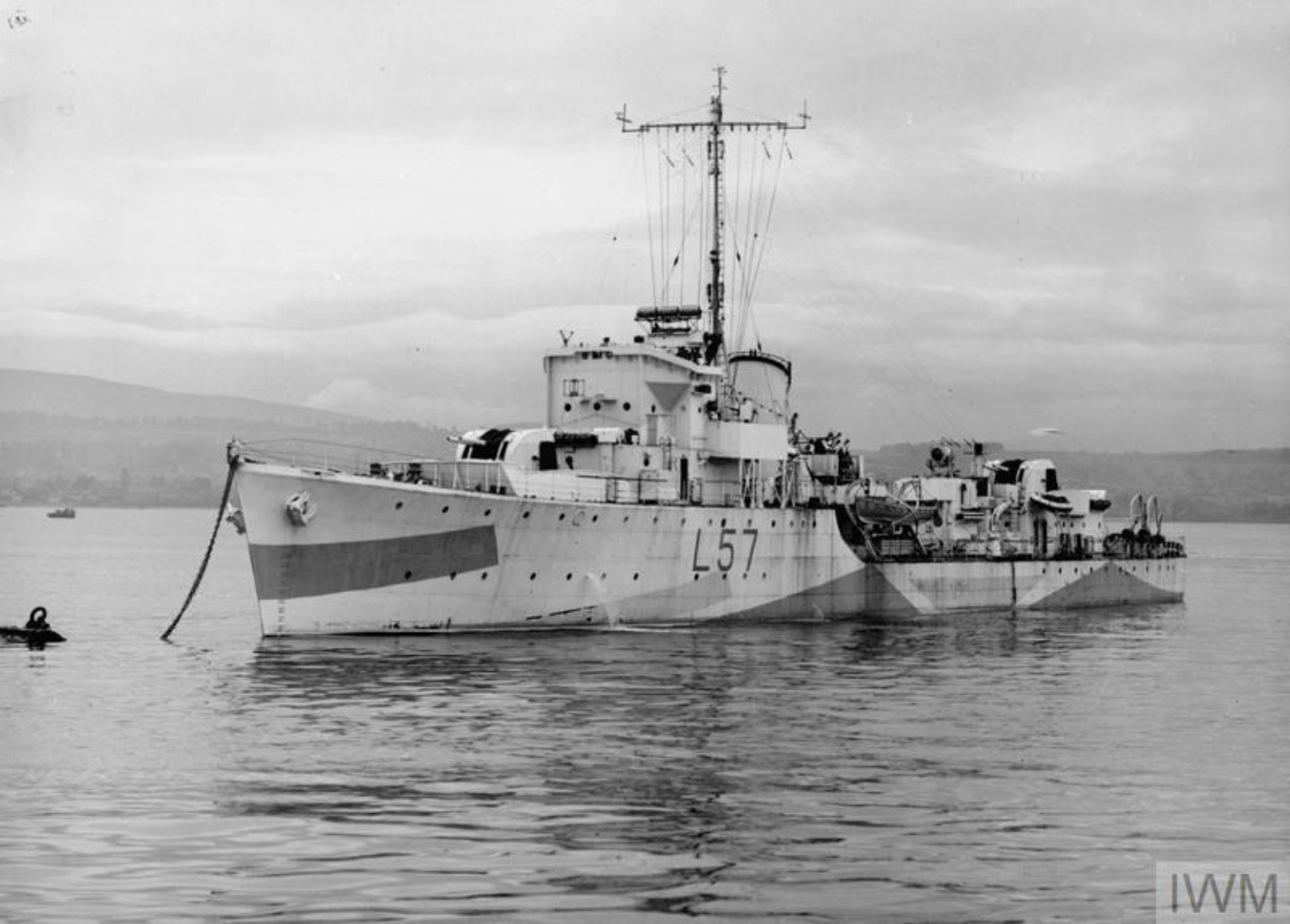
HMS Limbourne, L57
An original black-and-white view of Limbourne from the port bow. Her pennant L57, main guns, bridge, mast and camouflage boundaries can be seen. The exposure date and location have not been confirmed.
A report from Le Foulon brings together family remembrance and survivor testimony. Terry Wilmot explains why he attends in memory of his father Eric, while former Royal Marine John Eskdale takes part in the wreath laying.
Families return to Guernsey for the first in-person commemoration since 2019. The report follows relatives laying wreaths and records the Charybdis Association’s naval ensign being laid up at St John’s Church.
The seventy-fifth anniversary programme combined remembrance at sea, a parade, music and a naval football fixture. It also pointed visitors towards the Charybdis and Limbourne display in Castle Cornet’s maritime museum.
Roger Roberts returns to a swimming pool at ninety-seven, with support from care-home staff. The report includes his memories of holding onto wreckage with other men after Charybdis sank and the lasting effect on his life.
Alongside the anniversary programme, this report describes Guernsey residents helping a woman research her uncle’s possible burial place. It shows how remembrance continues through local knowledge, family questions and the sharing of photographs.
David ‘Rocky’ Royle recalls the cruiser he served aboard from commissioning to her loss. His memoir covers shipboard friendships, Mediterranean operations and the final voyage, with editorial notes identifying some errors in retrospective recollection.
An association booklet brings together the Admiralty battle summary, photographs, newspaper material and later reunions. Its layered record connects the action at sea with wartime funerals, surviving shipmates and the long relationship with Guernsey.
A Naval Intelligence report drawn from captured German records follows the convoy escort, radar warnings and torpedo attack. It offers a second documentary perspective, including wartime observations and claims that require comparison with British reports.
This ship-history account combines the operation’s chronology with recollections from Wensleydale’s rescuers. It includes Ernie Moseley helping a survivor aboard and describes the American soldiers who were serving temporarily with Limbourne.
John Eskdale’s letter to schoolchildren links the trauma of surviving Charybdis with the eightieth anniversary of VE Day. The report follows pupils hearing his memories aboard HMS Duncan as part of the VE Mail initiative.
Drachinifel’s naval-history video introduces HMS Charybdis as a Dido-class Royal Navy cruiser. The accompanying description points viewers towards further reading, making it a starting point for exploring the ship’s wider history.
John Eskdale recounts surviving Charybdis before continuing his wartime service in the Far East. The Veterans’ Foundation introduces his later connection with the Royal Marines and the memories he shares with a younger generation.
Reports the unveiling of a permanent memorial at the National Memorial Arboretum. Survivor Roger Roberts laid a wreath, while descendants of Limbourne survivor Neil Wood joined families marking the loss during pandemic travel restrictions.
Connects St John Ambulance's continuing remembrance work with its recovery of bodies washed ashore in 1943. Phil Ozanne and naval association representative Ian Brouard explain why the island continues to honour the crews.
Karen Andrew remembers her grandfather, Charybdis stoker Fred Andrew, as families and schoolchildren carry remembrance forward. The report describes pupils making wreaths and a descendant's search for a scarce book about the ships.
Reg Young's letters recall training, convoy work, friendships and everyday life aboard Wensleydale, a sister Hunt-class destroyer. He left the ship after an injury on 21 October 1943, just before the operation in which she helped rescue Charybdis survivors.
Sea cadets explain why remembering the two ships matters to their generation. Sophie Rabey's photographs accompany the report from the 2019 ceremony at Le Foulon, linking present-day island service with a long tradition of remembrance.
Guernsey's remembrance ceremony continued in 2020 while pandemic restrictions kept many families away. Participants describe the meaning of the gathering, including one islander's memory of watching it as a child. Adrian Miller's photographs record the service.
Wartime footage of convoy escorts, aircraft, anti-aircraft fire and damaged ships reaching Malta. These scenes place Charybdis’s Mediterranean service in its wider setting.
Aboard HMS Belfast, IWM curator Rob Rumble explains the bridge, guns, machinery, galley and sick bay. A companion view of naval roles across wartime ships.
Do you know of a newspaper report, interview, home movie, letter or photograph connected with these ships or their people? Send its reference and what you know about it. Material is reviewed before it appears here.