HMS
Limbourne
L57 · Hunt Type III escort destroyer
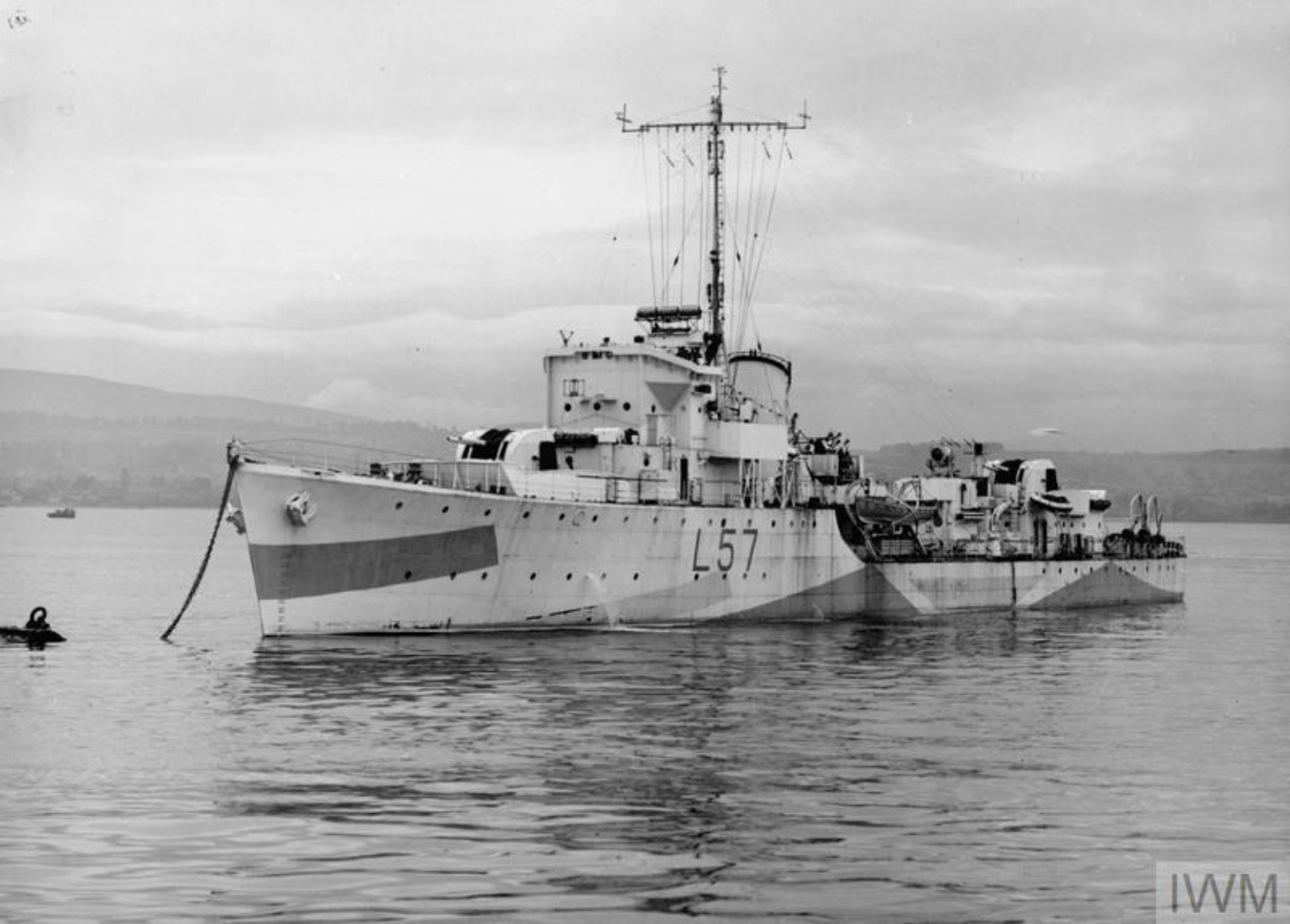
Built on the Clyde, Limbourne served on convoy escorts and patrols. Her last night came a year after she entered service.
- Built in
- Glasgow
- Entered service
- October 1942
During the Second World War, on 23 October 1943, two Royal Navy ships were lost in action against Nazi Germany’s navy off the coast of Brittany. Behind their names are hundreds of lives, acts of courage, and families whose stories reach across generations.
Plymouth · The Channel · Sept-Îles
The final sortie of Charybdis and Limbourne
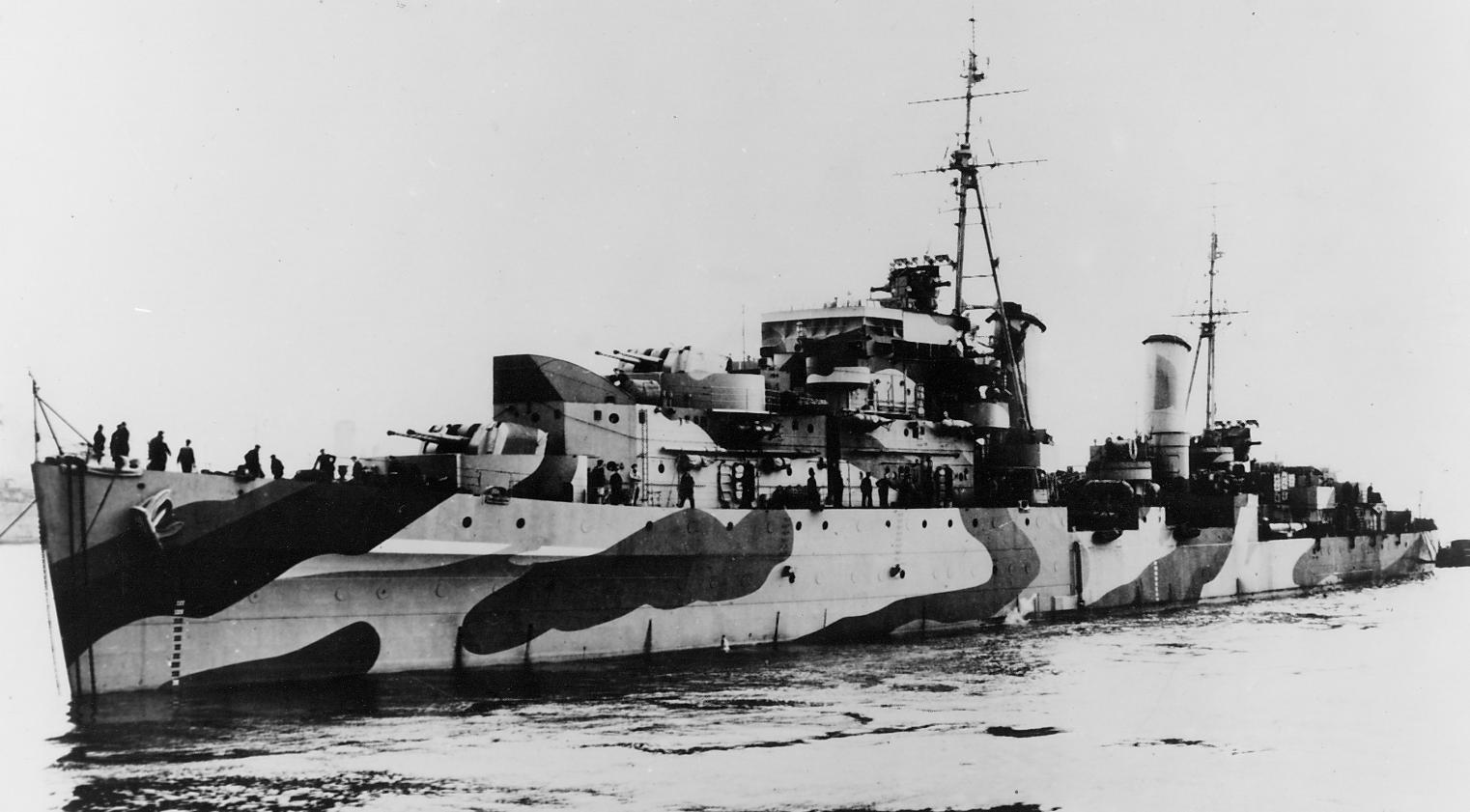
“Tunnel” was the name given to a series of British operations against German coastal shipping during the Second World War. This memorial follows the sortie of 22–23 October 1943, often called the Battle of Sept-Îles, and the lives connected to the two ships lost that night.
The cruiser Charybdis led six destroyers from Plymouth. In darkness off northern Brittany, German torpedo boats attacked. Charybdis sank. Limbourne, her bow destroyed, stayed afloat until her surviving crew could be rescued. After a failed tow, she was deliberately sunk.
Admiralty account and association historyTheir men searched the dark sea, lifted exhausted survivors aboard and helped save Limbourne’s company. Meet all seven ships and the people who carried out the rescue.
Choose a moment to follow what happened.
Charybdis leads Grenville, Rocket, Limbourne, Talybont, Stevenstone and Wensleydale into the Channel. Their task is to intercept German coastal shipping off northern Brittany.
Explore this moment in the full timelineFrom Plymouth and the coast of Brittany to the graves and remembrance of the Channel Islands. Explore the places that connect the ships, their people and their families.
Explore the map Enter the 3D reconstruction Geographic context with sourced history. The battle area is approximate.A cruiser and an escort destroyer. Different duties and journeys brought them together on the same operation.
L57 · Hunt Type III escort destroyer
Built on the Clyde, Limbourne served on convoy escorts and patrols. Her last night came a year after she entered service.
88 · Dido-class anti-aircraft cruiser
From Malta convoys and Operation Pedestal to the landings at Salerno, Charybdis’s story reaches far beyond her final Channel patrol.
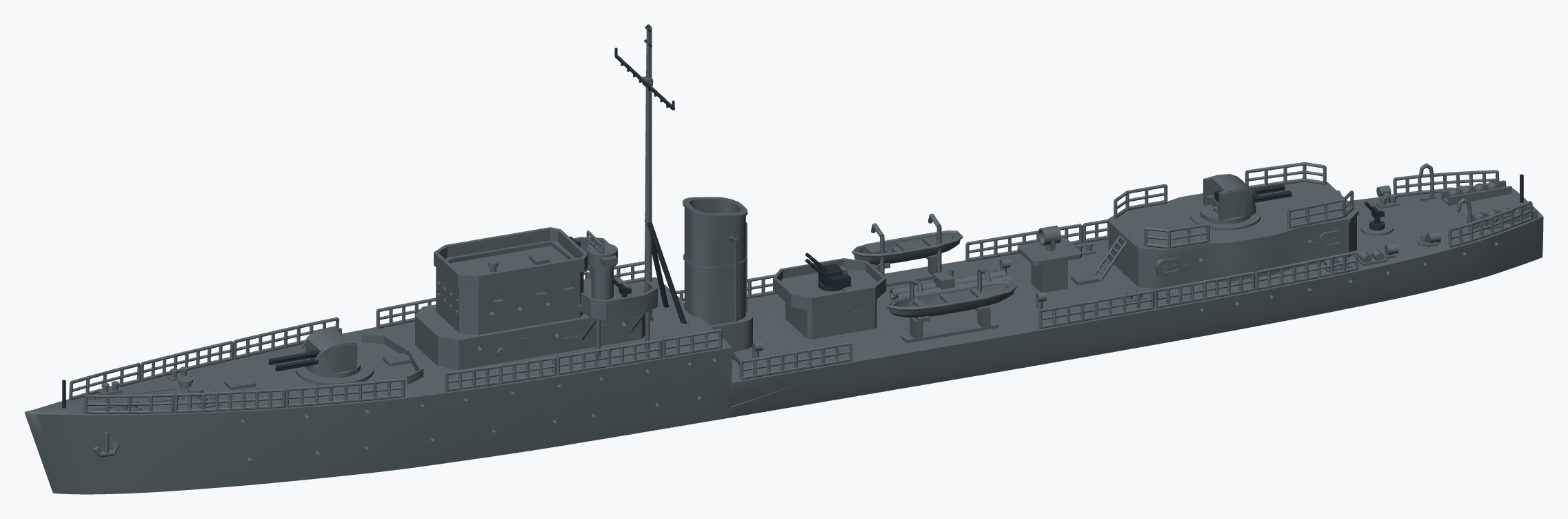 Explore Limbourne in 3D
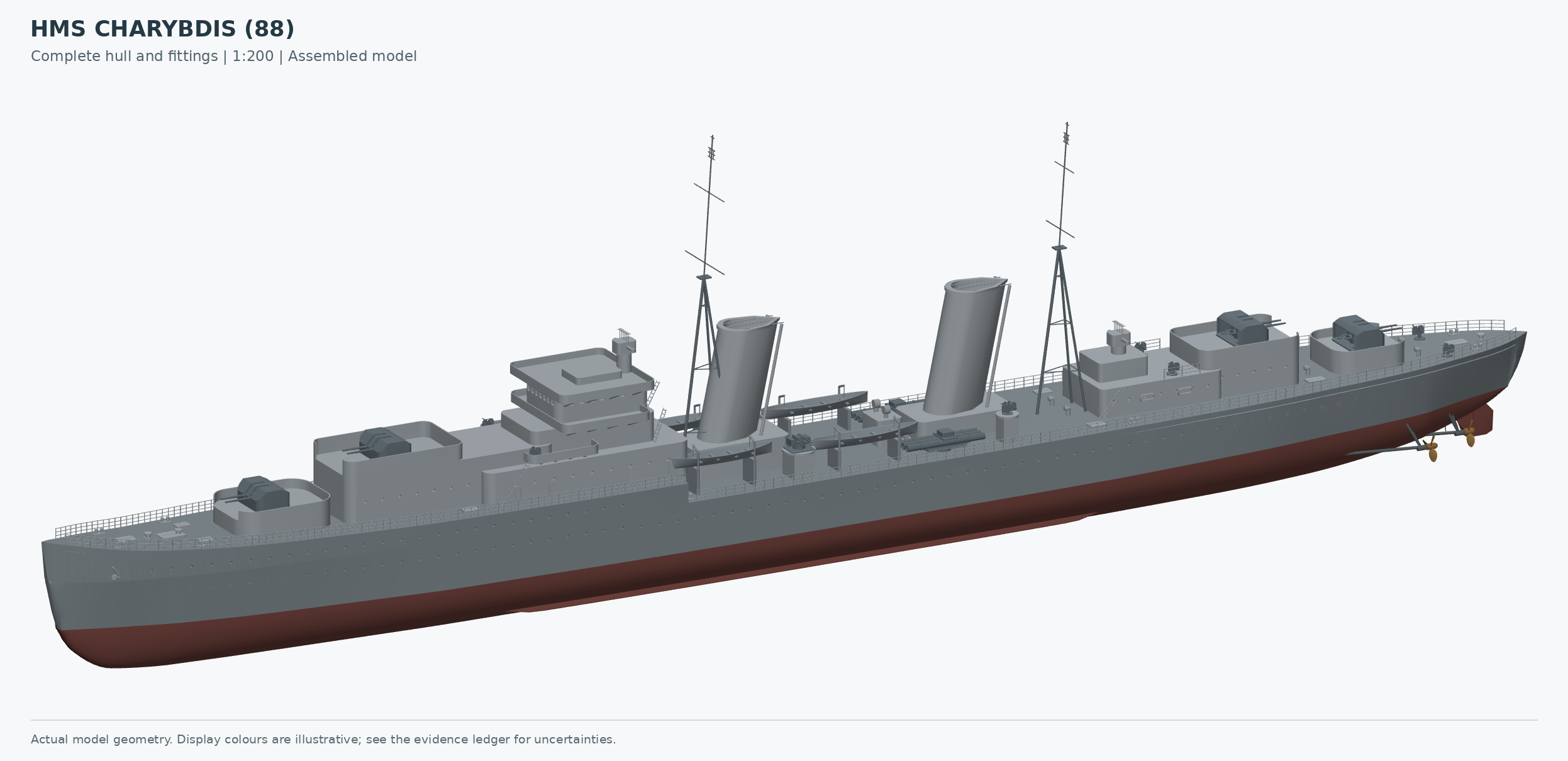 Explore Charybdis in 3D
Reconstruction previews; the ships are shown at different display scales.
Turn the ship, move in close, and choose a station. Learn how the bridge, guns, engine rooms and wireless office worked—and about the people who worked there.
Those who died and those who survived belong to this history. Search the register to find a person, read the evidence behind their record, and discover the details that families and historians have preserved.
524 names currently recorded. The register is growing and is not a complete list of everyone aboard.
Family albums, survivors’ memories and recorded interviews bring the history closer. Read and watch the original accounts.
Family photographs, service records and correspondence preserve George Smith’s life and his son Gordon’s search for answers.
Gordon Smith · Naval-History.Net 02 Read a survivor’s accountDavid ‘Rocky’ Royle recalls the cruiser he served aboard from commissioning to her loss. His memoir covers shipboard friendships, Mediterranean operations and the final voyage, with editorial notes identifying some errors in retrospective recollection.
Naval-History.Net / David ‘Rocky’ Royle 03 Watch an interviewJohn Eskdale recounts surviving Charybdis before continuing his wartime service in the Far East. The Veterans’ Foundation introduces his later connection with the Royal Marines and the memories he shares with a younger generation.
Veterans' Foundation / YouTube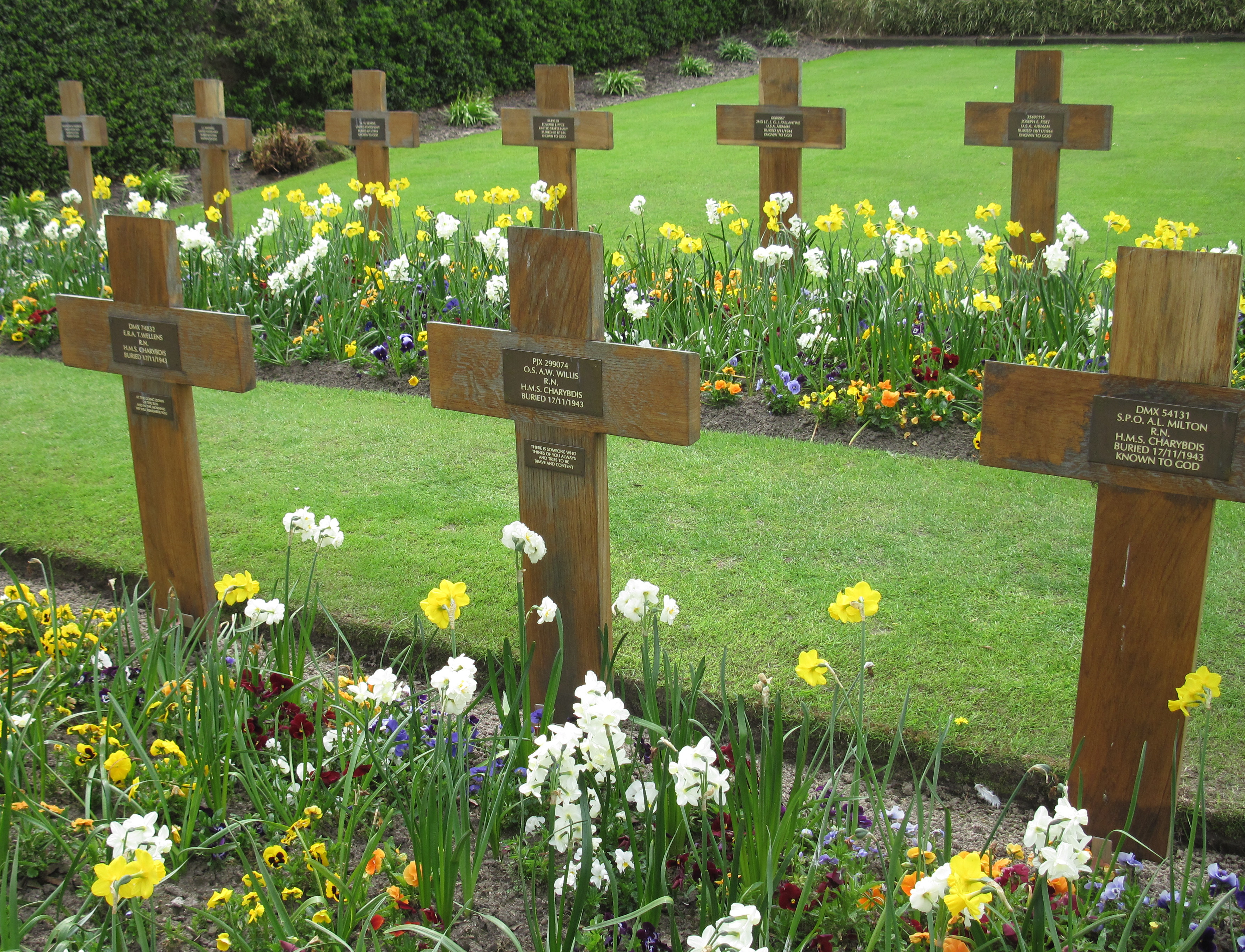
Men from the ships came ashore on the Channel Islands and the French coast. Families, islanders and successive generations have kept their memory through graves, services and personal acts of remembrance.
In occupied Guernsey, the funeral of 19 sailors on 17 November 1943 became a remarkable public expression of sympathy.
Discover the island connection Association history and commemorationA name, a letter, a photograph, a remembered conversation. Contributions help this memorial grow. We review their sources and add information as it is confirmed, preserving the distinction between records and personal recollection.
Contribute a memory or recordExplore the records, accounts and photographs behind this memorial.
Visit the source collection